Stable family and resilience
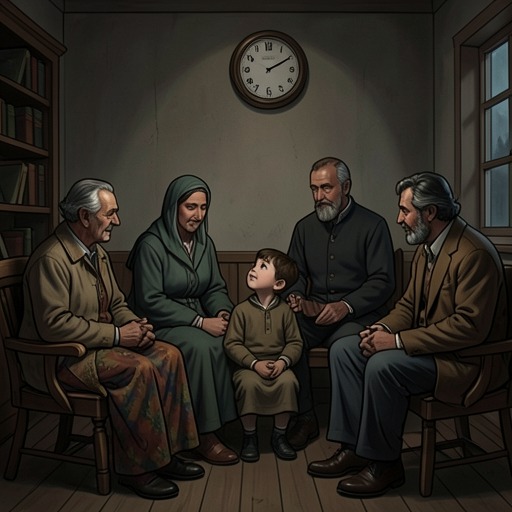
Hillbilly ElegyStable family and resilience is the memoir’s account of how a dependable home and caring adults can help a child endure instability without making that adversity disappear. For J.D. Vance, Mamaw’s home supplied not only shelter but continuity: after years of upheaval, he knew where he would live, could focus on school, and had an adult who both cared for him and expected him to build a life beyond crisis.
Meaning and conditions
The concept appears both as personal memory and as a broader explanation of why some children fare better than their circumstances might predict. The memoir invokes research on resilient children, who can prosper despite an unstable home when they have social support from a loving adult. But J.D. Vance grounds the idea in his own experience rather than presenting it as a theory that automatically accounts for individual outcomes. He remembers that Mamaw’s home felt safe and that her presence gave him hope; social science, in this telling, helps describe a pattern that he first knew as a lived difference.
Stability here does not mean a trouble-free family or an idealized household. The account acknowledges that the family had serious problems, while distinguishing those difficulties from the sustained instability of changing homes and relationships. The significance of Mamaw’s care lies in its reliability: it gave J.D. Vance a secure place to return to and a relationship that did not depend on the latest upheaval in his mother’s life.
Instability and the contrast of home
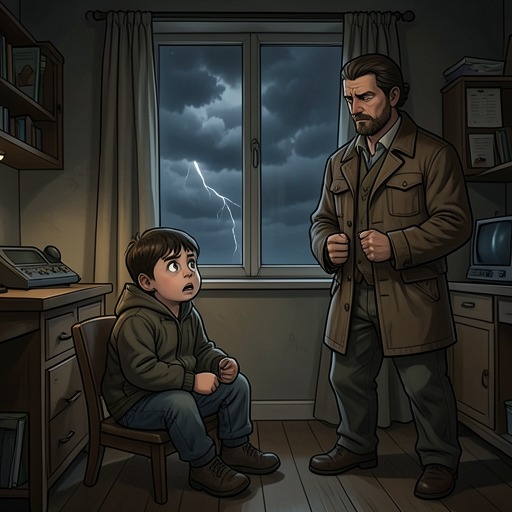
Before moving permanently in with Mamaw, J.D. Vance’s childhood involved repeated changes in both residence and household. The sequence included a move from Middletown to Preble County, changes between addresses on McKinley Street, and successive shifts in the adults around his mother. At the end of ninth grade, after a brief stay with his father, he moved in with Ken, a stranger to him, and Ken’s three children. Drug problems, a domestic-violence case, involvement by children’s services, and Papaw’s death compounded the disruptions. Looking back, J.D. Vance describes remembering that period as intensely anxiety-provoking.
That instability affected ordinary parts of a child’s day. Earlier, while living amid conflict at home, he struggled at school and dreaded the end of the school day because it meant returning to an unpredictable household. He wanted quiet and a home where he could stay, rather than another change in the adults or living arrangements around him. The contrast after his permanent move to Mamaw’s is striking: throughout tenth, eleventh, and twelfth grades, he lived in the same house with the same person. Stability was not an abstract virtue in this comparison. It was the end of repeated uncertainty about where he would live and what awaited him there.
How reliable care supported change
The memoir connects Mamaw’s consistent presence with changes in J.D. Vance’s schooling and daily life. His grades began to improve after the move, and the uninterrupted years with her gave him time to form friendships that lasted. In the quieter household he could do homework and concentrate on school and work, while his job helped clarify what he wanted from adult life. In retrospect, he sees truth in these explanations, but places particular emphasis on the happiness and security that came with knowing his home would remain his home.
Mamaw’s support also combined practical investment with expectation. She spent $180 on a graphing calculator for his schoolwork and insisted that he take his studies seriously. When encouragement alone did not persuade him to work, she demanded that he find a job; he became a cashier at a local grocery store. Her care was therefore not simply protection from hardship. It included insistence on effort and education, and it helped connect the safety of her household to future possibilities.
A Sunday with Aunt Wee’s children shows another dimension of that support. J.D. Vance was upset to leave them for his grocery-store shift, and Mamaw responded with unusual empathy rather than dismissing his feelings. She linked the family time he valued to the education and work that could make such time more available later. Her response made a peaceful afternoon with loved ones not merely a comfort but an example of the life he might work toward.
Relationships, repetition, and limits
The memoir does not suggest that a stable adult can erase the patterns a child has witnessed. As an adult, J.D. Vance recognized that he sometimes responded to conflict with Usha Vance by withdrawing, shouting, or trying to end the relationship, behaviors he associated with the family patterns he had grown up around. He came to understand that his impulse to escape had appeared across generations. A conversation with Aunt Wee also revealed that she had once approached disagreements with Dan as though preparing for a fight, even though their marriage had become one of the most successful he knew. Lindsay Ratliff described a similar tendency to treat conflict with Kevin as if he were an enemy. Such examples complicate any simple division between families that are resilient and families that are not: learned responses can persist, while relationships can also change.
Mamaw’s home nevertheless gave J.D. Vance an alternative experience against which he could recognize those inherited habits. In his account, he was able to see more than the worst of his community because he had a safe place and a loving embrace when he needed them. He also had examples of caring adults beyond Mamaw, including Papaw and the household of Aunt Wee and Dan. Their support formed part of a wider network rather than a single intervention, and the memoir repeatedly presents such dependable relationships as consequential precisely because they were not guaranteed to every child around him.
From personal memory to social conditions
The concept also shapes the memoir’s movement from family history to social analysis. J.D. Vance later considers research suggesting that opportunity varies across places and that single-parent households and income segregation help explain some of that unevenness. He resists treating family and community problems as a puzzle with one policy solution, while arguing that assistance can still improve the prospects of people at the margins. His own life appears, in this account, as the result of many supports accumulating: grandparents who remained present, a sister who protected him, relatives who opened their home, and adults who offered examples of work, learning, or loving partnership.
That perspective gives resilience a specific, limited meaning. It is not proof that children can simply overcome any hardship by willpower, nor a claim that supportive relatives solve the broader conditions surrounding poverty and family instability. Rather, the memoir shows how reliable care can interrupt the effects of chaos long enough for other opportunities to take hold. For J.D. Vance, the decisive change was not that the past vanished, but that a stable home made a different future conceivable—and gave him the security from which to pursue it.